

Integral Mission
The Gospel Lived Out in a World That Cries Out

How relevant is our faith to the world we live in today?
Are we proclaiming a gospel that transforms people’s entire lives, or only one dimension of them?
In February 2024, together with a group of pastors and leaders from the AVANCE fellowship of City to City, I had the opportunity to visit the Genesis Community Church in Alajuelita, Costa Rica. Alajuelita is a low-income community on the outskirts of the capital city of San José. What we experienced there was not merely inspiring, but profoundly challenging.
We witnessed a church fully immersed in its community, actively responding to the real needs of the people there. We witnessed a church that has not separated the proclamation of the gospel from the practice of Christian love.
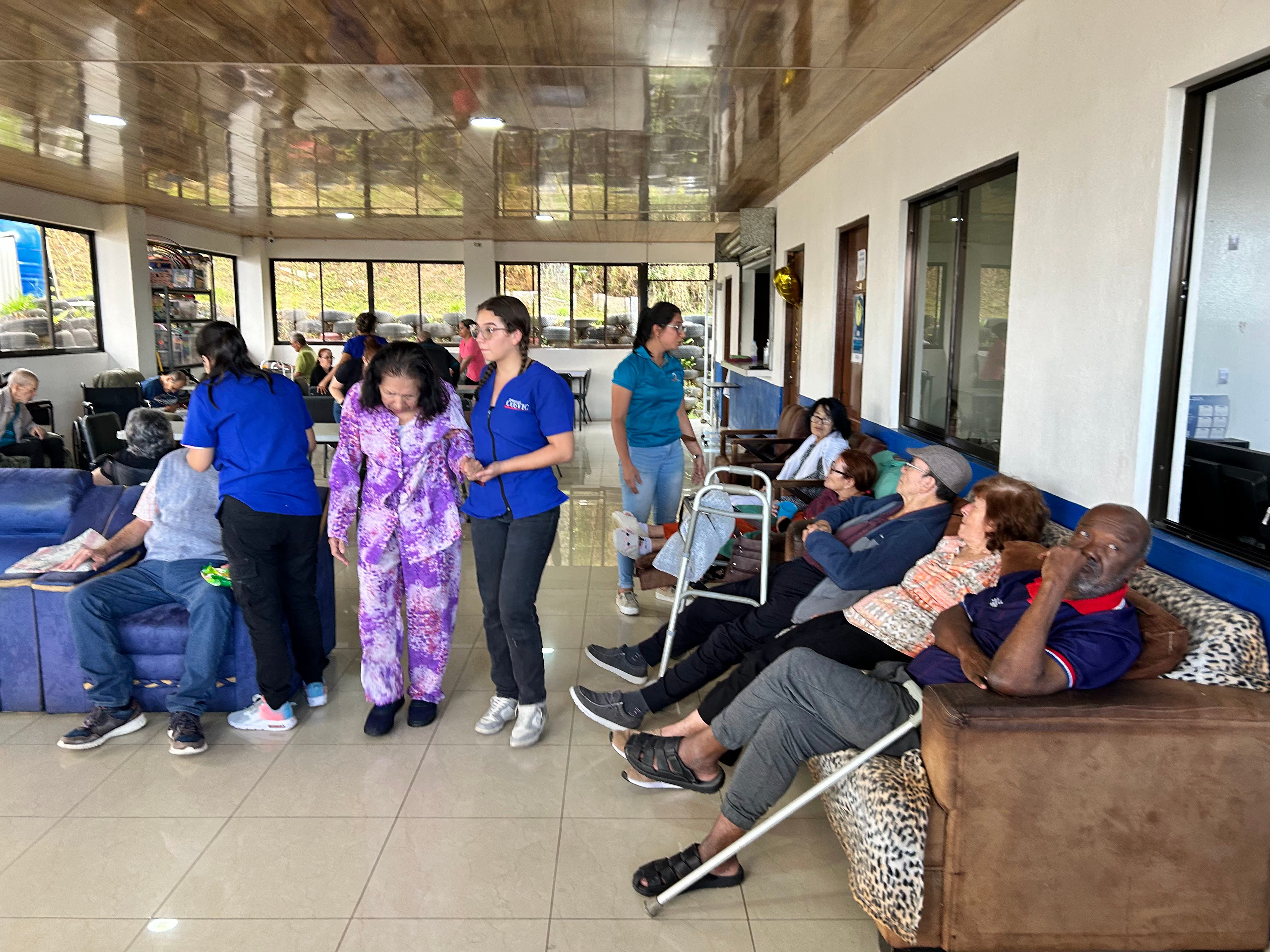
We visited homes for teenagers with behavioral problems. At the time of our visit, they already had several houses, for both girls and boys. We also observed ministries aimed at vulnerable children, restoration programs for abused women, those trapped in addiction, care for people with special needs, a nursing home, and an active commitment to immigrants.
Each of these ministries wasn’t an isolated project, but a coherent expression of a church that understands its calling to be the hands of God in the world to alleviate the pain of others.
The Genesis Community has practiced integral (or holistic) mission for many years. Their Facebook page says: “We are a community that lives and demonstrates God’s love through actions, words, and service.”
It’s not simply a strategy. It’s a lived theology. It’s not a program. It’s the gospel incarnated.
In light of this powerful witness, an inevitable and urgent question arises: Are we practicing and teaching a holistic mission or have we reduced the gospel to just a sermon from a pulpit?
Historical and Biblical Foundations
In 1974, evangelical leaders from around the world gathered at the International Congress on World Evangelization in Lausanne, Switzerland to reflect on the nature of the Christian mission in a changing world. This meeting marked a turning point in the global church’s understanding of mission. It recognized that evangelism cannot be separated from social responsibility. René Padilla, known as the father of integral mission and co-founder of the Latin American Theological Fraternity (Fraternidad Teológica Latinoamericana or FTL), was highly influential in the document that emerged from that gathering called the Lausanne Covenant.
This document states: “We affirm that God is both Creator and Judge of all men. Therefore, we must share his concern for justice and reconciliation throughout human society and the liberation of men from every kind of oppression. Humanity was made in the image of God; consequently, every person, whatever their race, religion, color, culture, class, sex, or age, has an intrinsic dignity because of which they must be respected and served, not exploited… When people receive Christ, they are born again into his kingdom and must spread justice in the midst of an unjust world. If the salvation we claim to have does not transform us in the fullness of our personal and social responsibilities, it is not salvation from God. Faith without works is dead.” (1)
The Lausanne Movement currently defines Integral Mission as:
‘The task of bringing the whole of life under the lordship of Jesus Christ’ and includes the affirmation that there is no biblical dichotomy between evangelistic and social responsibility in bringing Christ’s peace to the poor and oppressed. This was further clarified at the 2001 meeting of the Micah Network in Oxford as ‘the proclamation and demonstration of the gospel,’ emphasizing that it is not simply the issue of evangelism and social involvement being done alongside each other but rather that ‘our proclamation has social consequences as we call people to love and repentance in all areas of life’ and that ‘our social involvement has evangelistic consequences as we bear witness to the transforming grace of Jesus Christ.’
The mission of the church cannot be reduced to the salvation of the soul; it includes the total transformation of the human being in each of its dimensions.
These statements do not amount to a new theological discovery, but rather a recovery of a biblical truth that has been forgotten or neglected in certain contexts.
These statements lead us directly to the ministry of Jesus. In Luke 4:18-21, He defines his mission, in his first sermon, in this way: proclaiming good news to the poor, freedom to the captives, sight to the blind, and liberation to the oppressed.
Here we find a central truth: the gospel not only responds to sin, but also to the consequences of sin in human life and in society.
The gospel saves and it restores. The gospel forgives and it restores dignity. The gospel transforms every dimension of life. By observing the life of Jesus, we find this perfect integration between word and deed.
In Matthew 9:35-38, we are given a summary of Christ’s ministry: He traveled through cities, taught in the synagogues, preached the gospel of the Kingdom, and healed every disease and sickness.
There is no fragmentation here. There is deep integration.
Jesus proclaimed the message of the Kingdom, calling for repentance and faith. But he also made disciples, teaching them the truth of God, and responded with compassion to human needs. Healings, acts of mercy, and care for the marginalized were not secondary activities, but visible signs that the Kingdom of God was breaking into history.
The gospel involves both proclamation and demonstration through justice and mercy. Mercy is not just the work of the Christian. Mercy is evidence of the Christian.
Therefore, we cannot separate what is united in Christ. The gospel is proclaimed and demonstrated.
The Early Church: a Transformative Community
The first-century church understood this reality and lived it in a concrete way.
In Acts 4:32-35, we see a community radically sharing its resources to meet the needs of its members who were lacking. In Acts 6, the church organizes the care of widows. In Acts 11, it responds to a crisis in another region. James, in his letter, also denounces injustice and calls for caring for the vulnerable (5:1-6). James 2:18 speaks of how the reality of our faith is demonstrated by works: “I will show you my faith by my works.”
For the early church, the Christian faith was not merely a matter of doctrines or beliefs, it was supremely practical. True biblical faith is inseparable from a life that responds to all the needs of the human being. The church not only proclaimed the gospel but was a visible evidence of it.
Integral Mission in Our Current Contexts
The world we live in today presents complex challenges: economic inequality, mass migration, family crisis, violence, addictions, loneliness, depression, and a growing sense of spiritual disconnection.
In cities like Houston, where I live, these realities are evident. Immigrant communities face cultural, economic, and legal barriers. Young people struggle with identity and purpose. Families live under constant pressure. This context should not be seen as an obstacle for the church, but rather as the mission field where God has placed us. However, there is a real danger: reducing the gospel to an exclusively spiritual message or, at the other extreme, focusing solely on social action without the transformative power of Christ.
Integral mission rejects both extremes. As Keller warns: “Effective churches will be so involved in works of mercy and justice that outsiders will say, ‘We can’t do without churches like these.’
The gospel must be proclaimed clearly, but also faithfully embodied. That is why one of the values we promote at Diaspora Network is integral mission.
The Diasporic Church: A Providential Opportunity
In our context then, the diaspora church has an extraordinary responsibility and opportunity.
God has moved the nations and created multicultural contexts where the gospel can advance strategically. The diaspora church understands the language, culture, and struggles of its people.
This is not by chance. It is divine providence. The diaspora church, then, is called to be a bridge between cultures, a refuge for the vulnerable, an instrument of reconciliation, a community that lives the gospel visibly.
This is the moment to step forward. It’s not enough to simply exist; we must make an impact. It’s not enough to preach; we must embody the message.
Final Reflections
In the light of eternity, Jesus presents us with a solemn scene in Matthew 25:31-40: the judgment of the nations.
There, the criterion is not only the profession of faith, but the evidence of a transformed life.
“I was hungry, and you gave me food… I was a stranger, and you welcomed me… I was sick, and you visited me…”
And then, the declaration that resonates with eternal power:
“Truly I tell you, whatever you did for one of the least of these brothers and sisters of mine, you did for me.” Today the church is called to respond: to see, to feel, to act, and to live a complete gospel.
Let us be a church that not only proclaims Christ, but makes Him visible. Integral mission is not an option. It is a given. It is the gospel made visible in daily life. It is Christ being reflected in our actions.
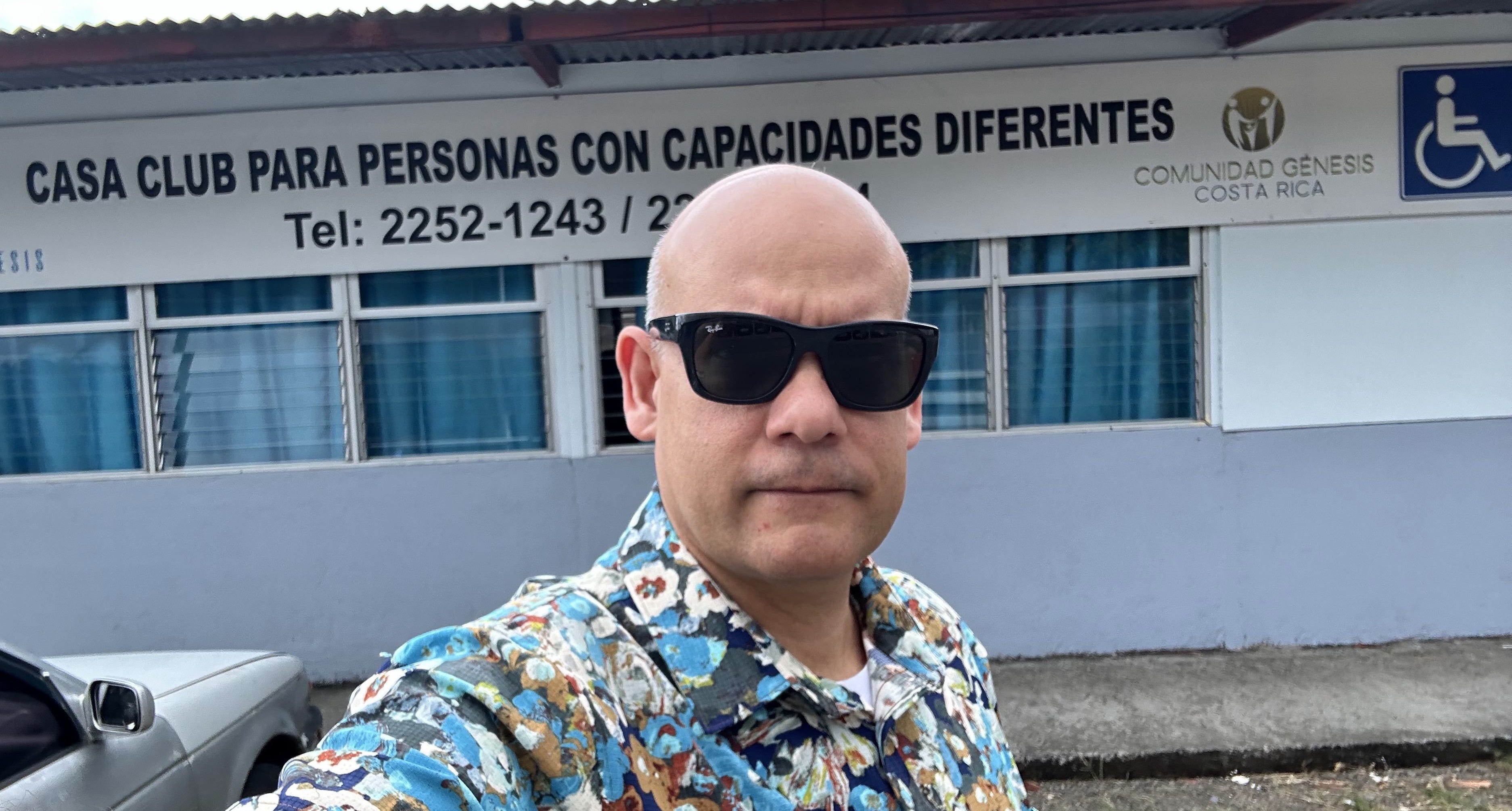
Pastor Liván Quintana (far right) is Diaspora Network’s Hispanic/Latino Catalyst. He currently is leading the Entrenamiento en Plantación de Iglesias, a Spanish-language Latino Church Planting cohort that currently includes Latino leaders from both Houston and Austin from Cuban, Puerto Rican, Mexican, Honduran and Venezuelan backgrounds.
Bibliography
Padilla, René. Misión Integral: Ensayos sobre el Reino de Dios. Miami: Editorial Kairos, 2015 (pp. 15-16)
Keller, Timothy. Iglesia Centrada. Miami: Editorial Vida, 2014.